Best Temples to Visit in Egypt: Complete Travel Guide & Tips

Egypt’s ancient temples are among the world’s most impressive archaeological wonders. If you’re planning a trip, knowing which temples to visit and how to plan your time makes all the difference.
This guide covers the best temples to visit in Egypt, focusing on must-see sites in Luxor, Aswan, and along the Nile. You’ll find details on what makes each temple special, how long to spend there, entry fees, and the best times to visit.
Whether you want to see the massive columns of Karnak Temple, experience sunrise at Abu Simbel, or explore the riverside beauty of Philae Temple, this guide helps you build an efficient itinerary at your own pace. Most visitors explore these temples over 3-5 days as part of a Nile River journey. For a complete trip plan, check out our 10-day Egypt itinerary that shows you how to fit these temples into a well-paced route.
Let’s dive into the top 7 temples worth adding to your Egypt travel plans.
1. Karnak Temple (Luxor) — The Ultimate Ancient Egyptian Temple
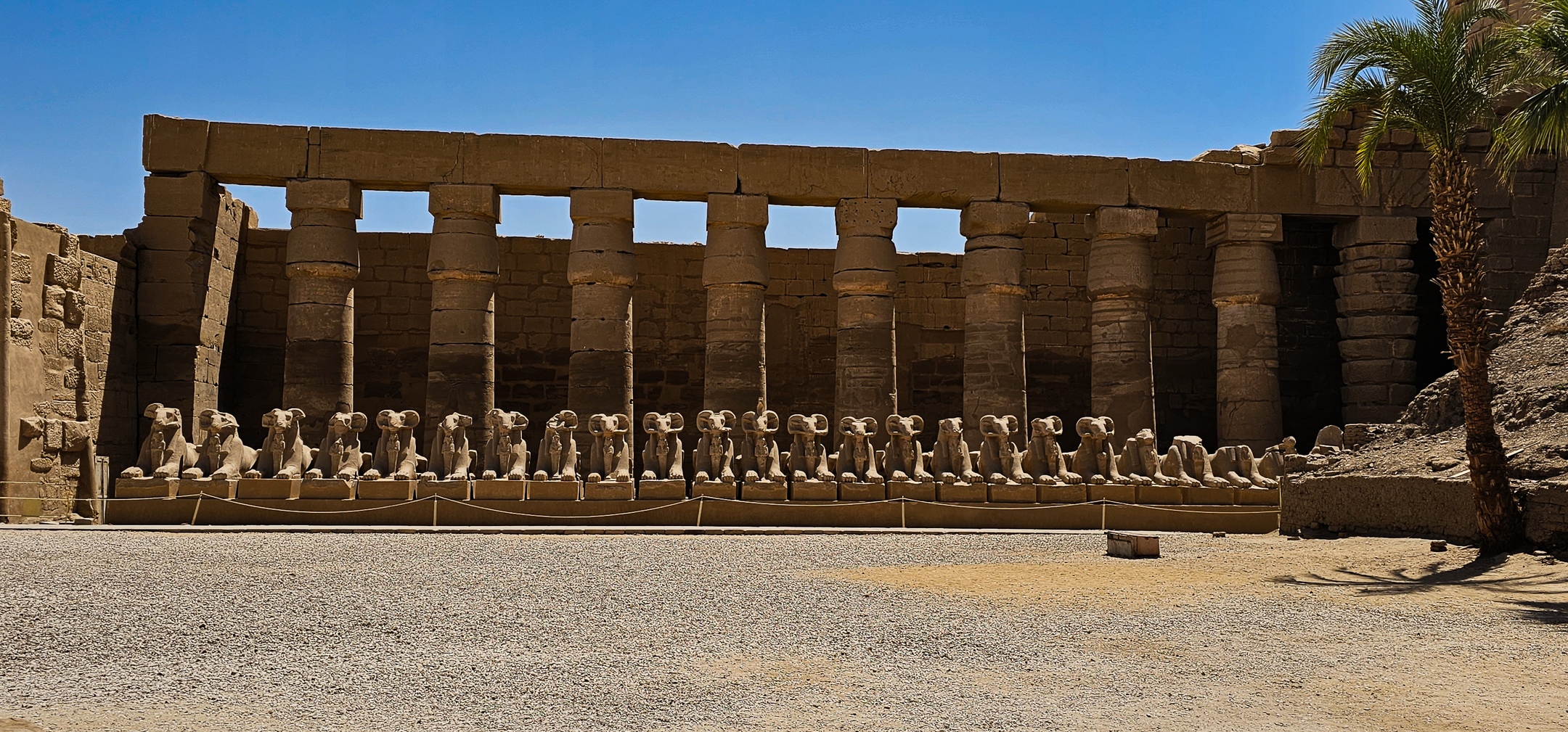
Karnak Temple is the largest religious complex ever built and the most impressive temple site in Egypt. Built over nearly 2,000 years by multiple pharaohs, it offers an unmatched look at ancient Egyptian power, religion, and architectural ambition.
Top things to see:
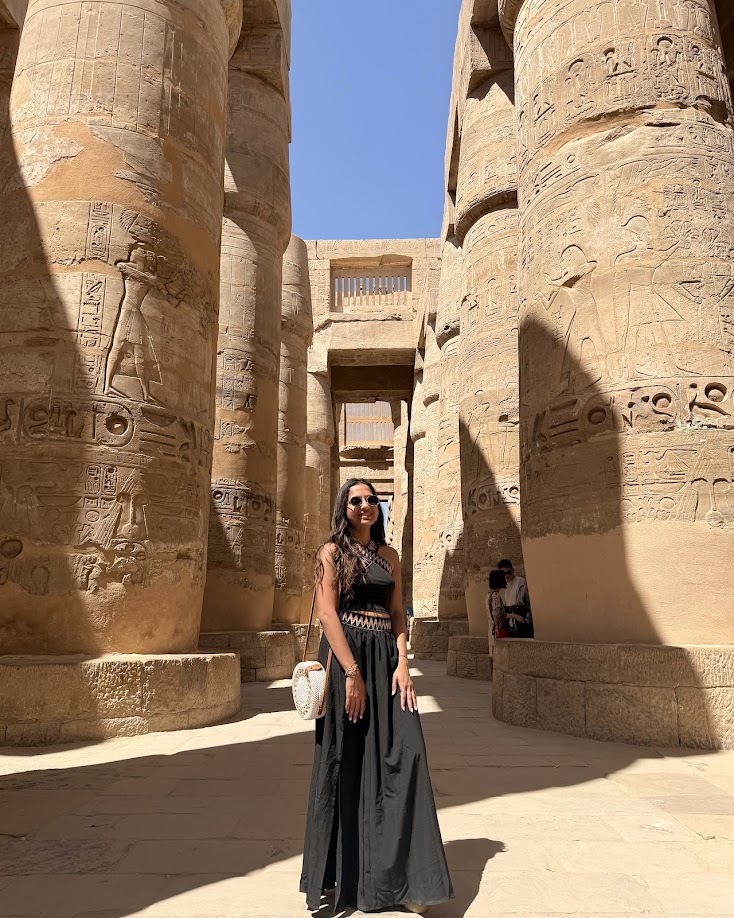
- Great Hypostyle Hall: Walk among 134 massive columns, many still covered in original hieroglyphs and carvings.
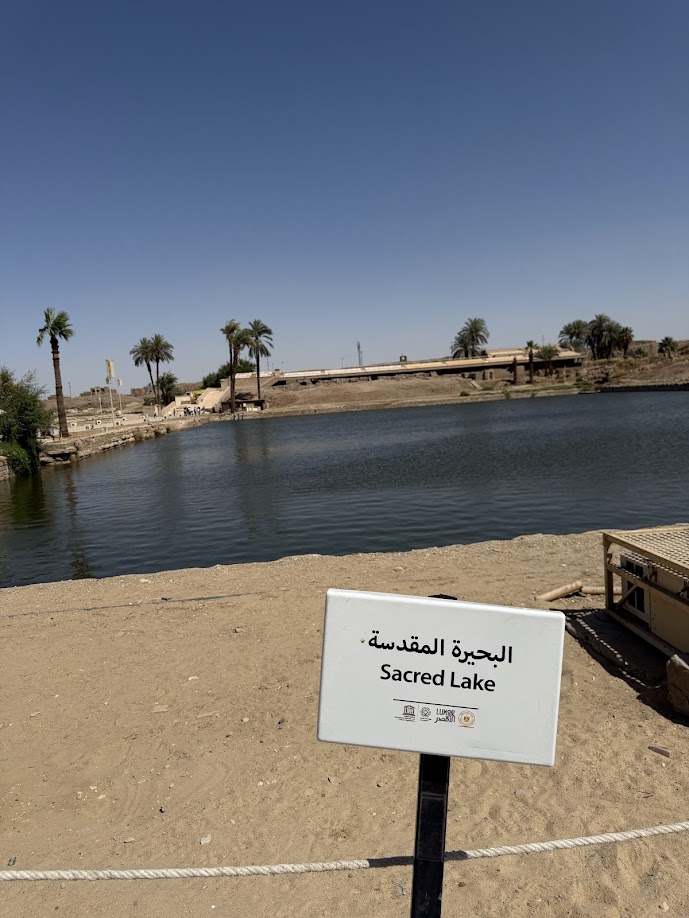
- Sacred Lake: Used by priests for ritual purification; one of the best spots to understand daily temple life.
- Obelisks of Hatshepsut: Some of the tallest surviving obelisks in Egypt.
- Avenue of Sphinxes: Connects Karnak to Luxor Temple and helps visualize ancient religious processions.
Interesting facts you should know:
- Karnak was not built by a single ruler — over 30 pharaohs contributed to its expansion.
- The Great Hypostyle Hall alone covers more area than many entire temples in Egypt.
- Ancient Egyptians believed Karnak was a sacred meeting place between the gods and the pharaohs.
- Time needed:
- 2–3 hours
- Best time to visit:
- Early morning year-round to avoid crowds and heat
- Entry fee:
-
- 600 EGP (~$12.50 USD)
- 300 EGP for students
Travel tip:
Karnak Temple is located on Luxor’s East Bank and is easily reached by taxi or horse carriage from central Luxor. Using an audio guide is highly recommended, as the site is vast and the historical context greatly enhances the experience. Wear comfortable shoes and bring water, as shade is limited inside the Temple.
2. Abu Simbel Temples (Aswan) — Iconic Monuments Carved in Rock
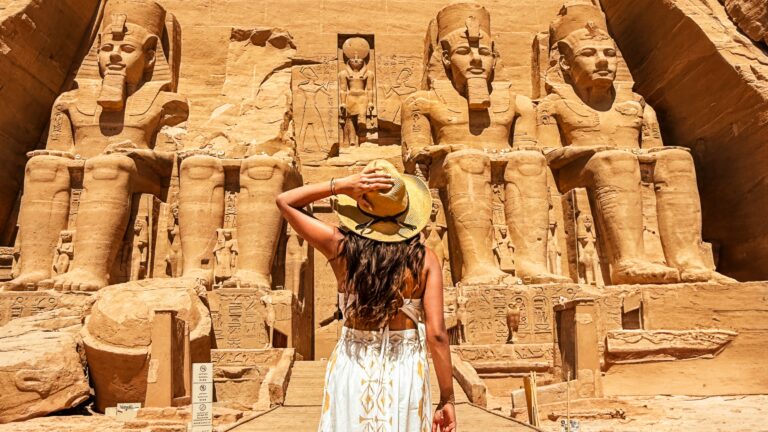
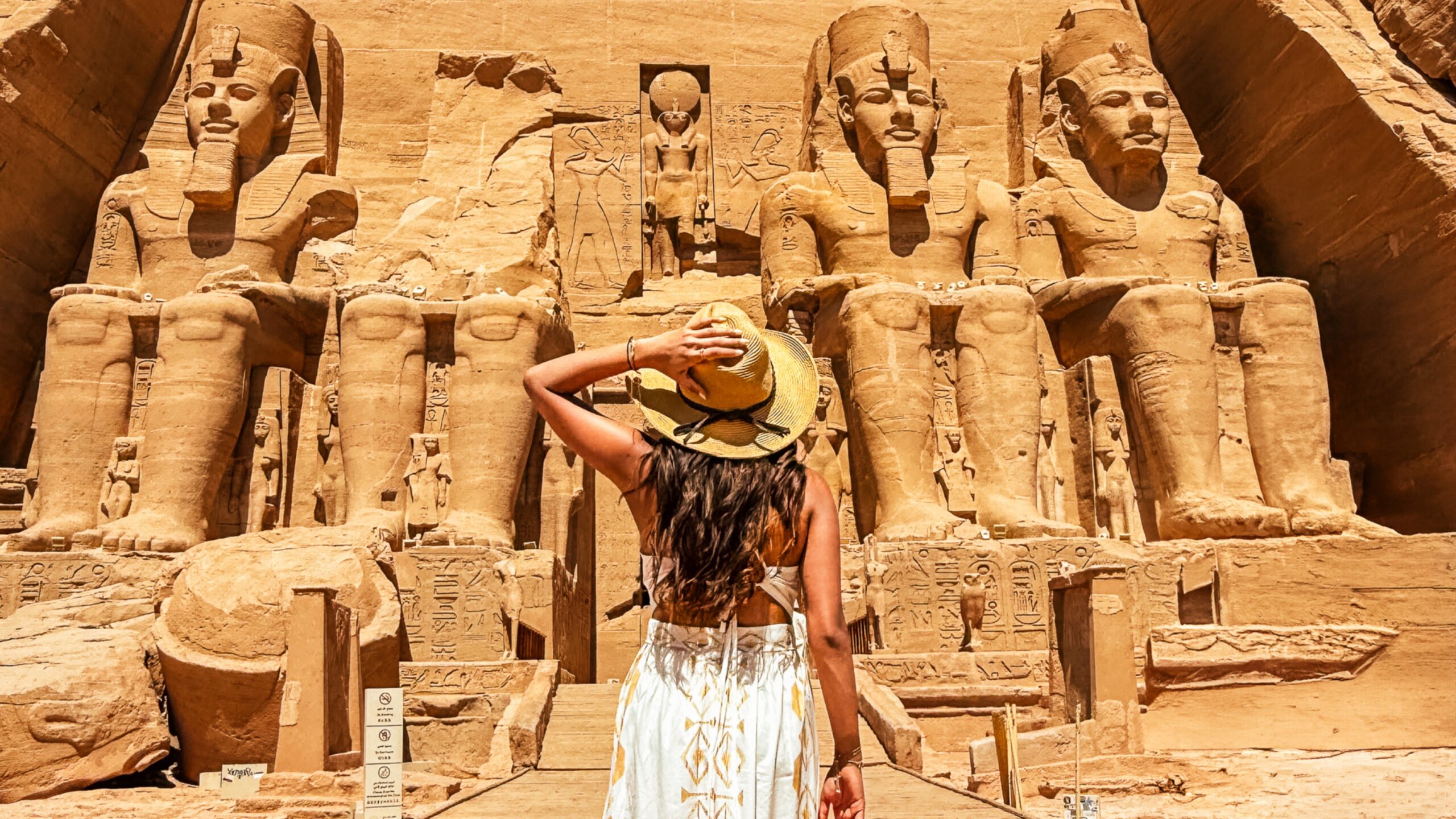
Abu Simbel is one of Egypt’s most extraordinary sights, famous for its colossal statues and dramatic setting near the Sudanese border. The temples were carved directly into a mountainside and later relocated to avoid flooding from the Aswan High Dam.
Top things to see:
- Great Temple of Ramses II: Admire the four seated statues guarding the entrance.
- Inner sanctuary: See the famous solar alignment chamber.
- Temple of Nefertari: Dedicated to Ramses II’s queen, rare in ancient Egypt.
Interesting facts you should know:
- The main temple aligns with the sun twice a year, illuminating the inner sanctuary.
- The entire complex was moved in the 1960s in one of the greatest archaeological rescue operations ever.
- The statues of Ramses II stand over 20 meters tall.
- Time needed:
- 2–3 hours
- Best time to visit:
- Early morning, especially during summer
- Entry fee:
-
- 600 EGP (~$12.50 USD)
- 300 EGP for students
Travel tip:
Abu Simbel is best visited on a day trip from Aswan, either by early-morning convoy, private car, or short flight.
3. Medinet Habu (Luxor) — The Best-Preserved Mortuary Temple
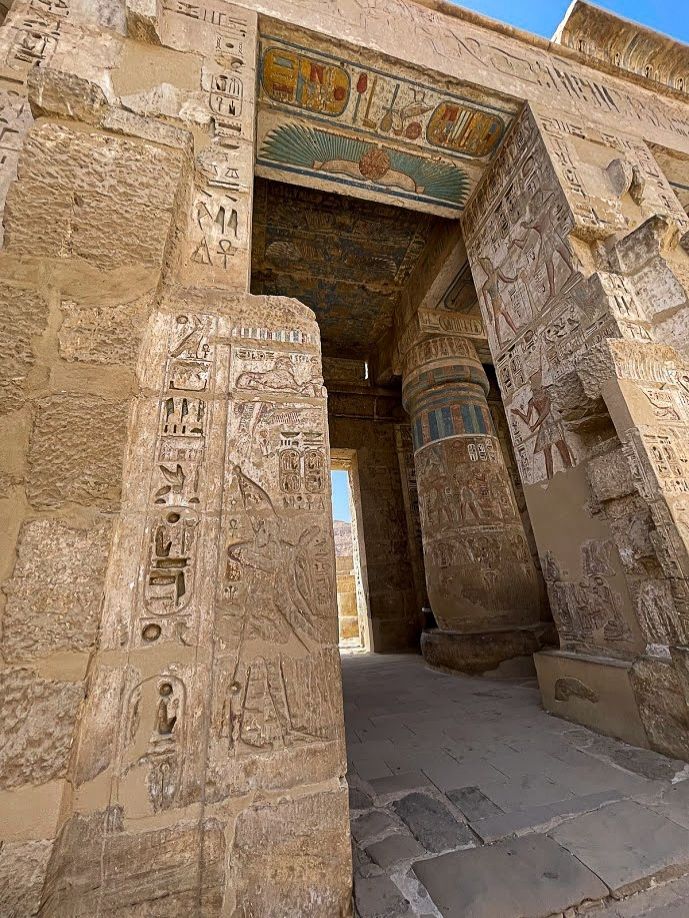
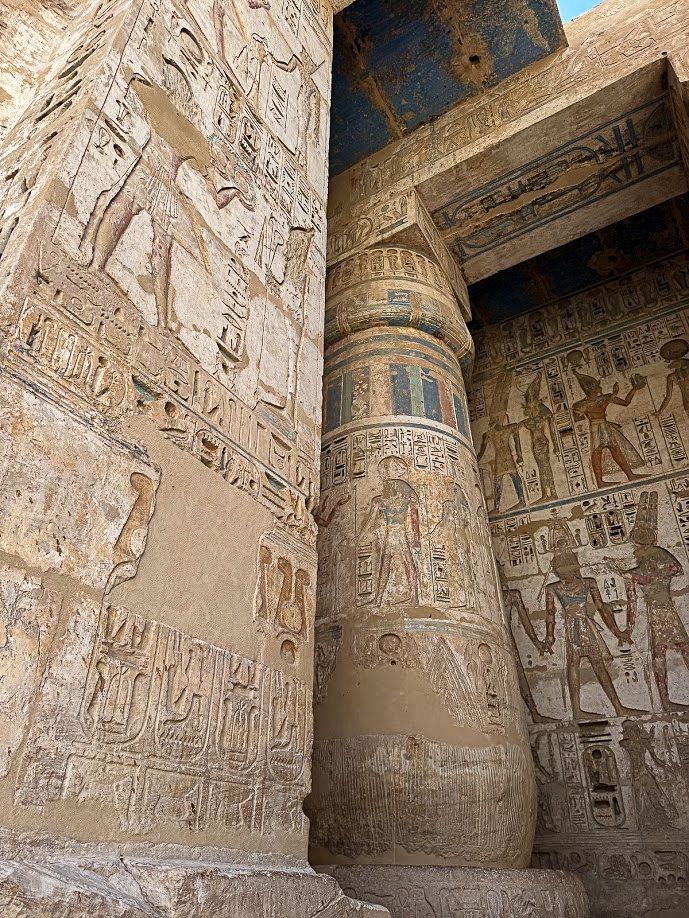
Medinet Habu is one of Luxor’s most underrated temples, offering well-preserved reliefs, massive walls, and fewer crowds compared to other West Bank sites.
Top things to see:
- Temple of Ramses III with detailed battle scenes
- Towering mudbrick enclosure walls
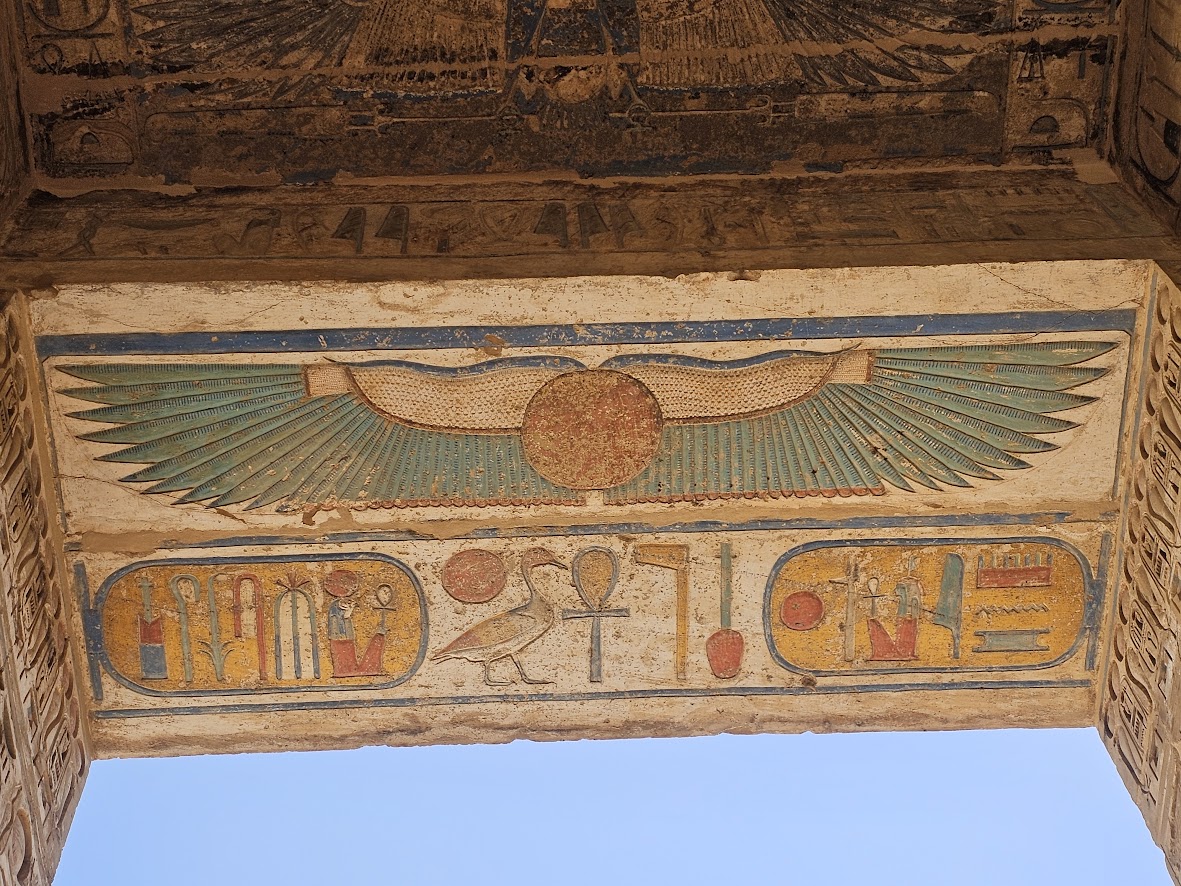
- Colorful reliefs still visible on the walls
Interesting facts you should know:
- Built by Ramses III, it depicts some of the most detailed battle scenes in Egypt.
- Original colors are still visible on many walls.
- The surrounding mudbrick walls once formed a fortified complex.
- Time needed:
- 1–1.5 hours
- Best time to visit:
- Any time is fine as it’s one of hidden gem
- Entry fee:
-
- 200 EGP (~$4 USD)
- 100 EGP for students
Travel tip:
Located on Luxor’s West Bank, Medinet Habu is easily combined with Hatshepsut Temple and the Valley of the Kings. A guide helps explain the military scenes and historical significance.
4. Luxor Temple (Luxor) — Best Temple to Visit at Night
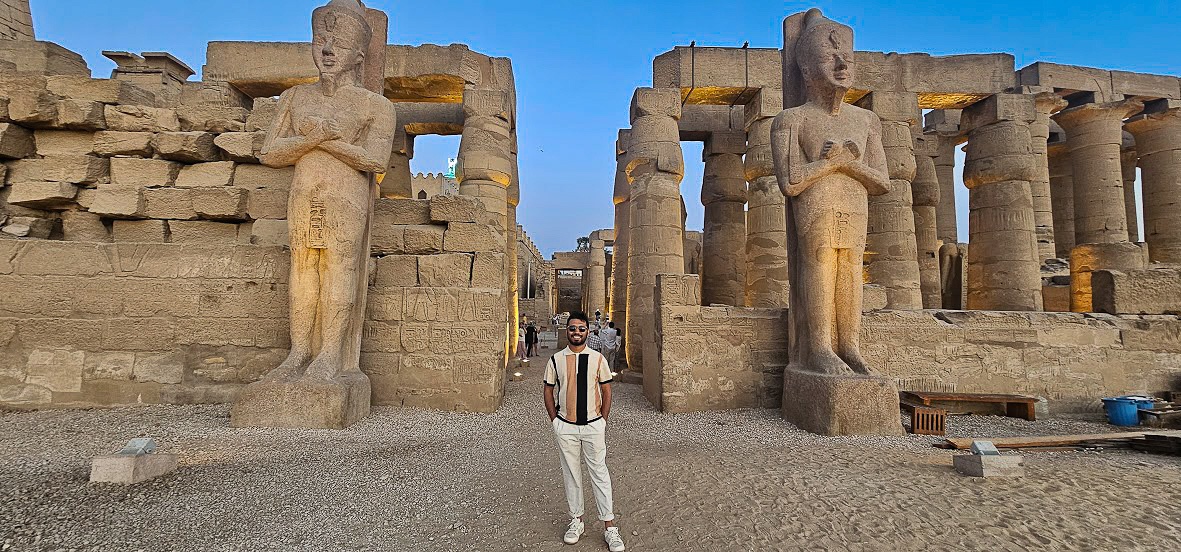
Luxor Temple stands out for its central location and stunning evening illumination, making it one of the most atmospheric temples in Egypt.
Top things to see:
- Avenue of Sphinxes connecting Luxor and Karnak
- Colonnade of Amenhotep III
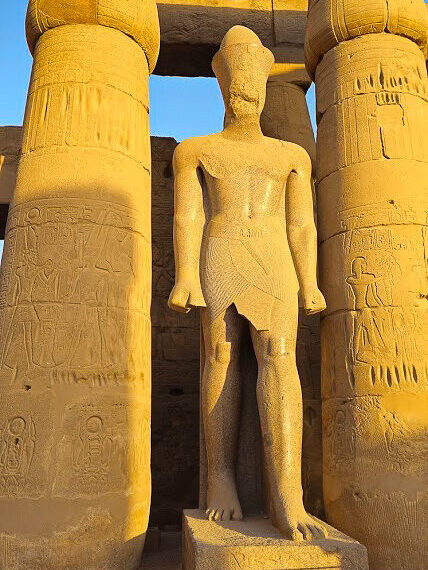
- Courtyard of Ramses II with massive statues
Interesting facts you should know:
- Connected to Karnak by the Avenue of Sphinxes.
- Parts of the temple were reused by Romans and later cultures.
- Still used for religious festivals in ancient times.
- Time needed:
- 1–1.5 hours
- Best time to visit:
- Evening or after sunset
- Entry fee:
-
- 500 EGP (~$10 USD)
- 250 EGP for students
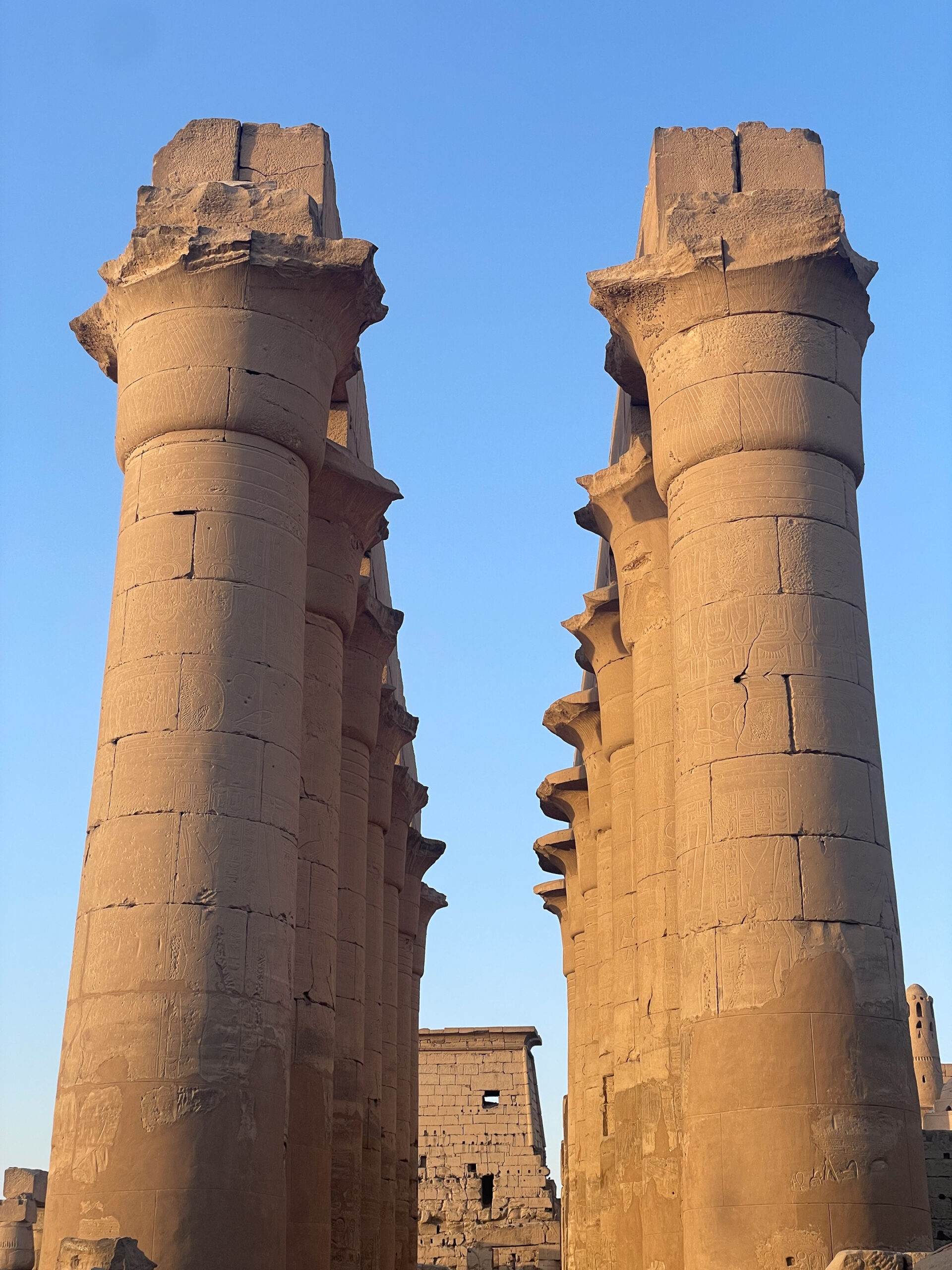
Travel tip:
Luxor Temple is located in the heart of Luxor and can be visited on foot from many hotels. Visiting after dark offers cooler temperatures and dramatic lighting.
5. Kom Ombo Temple (Between Luxor & Aswan) — Unique Double Temple
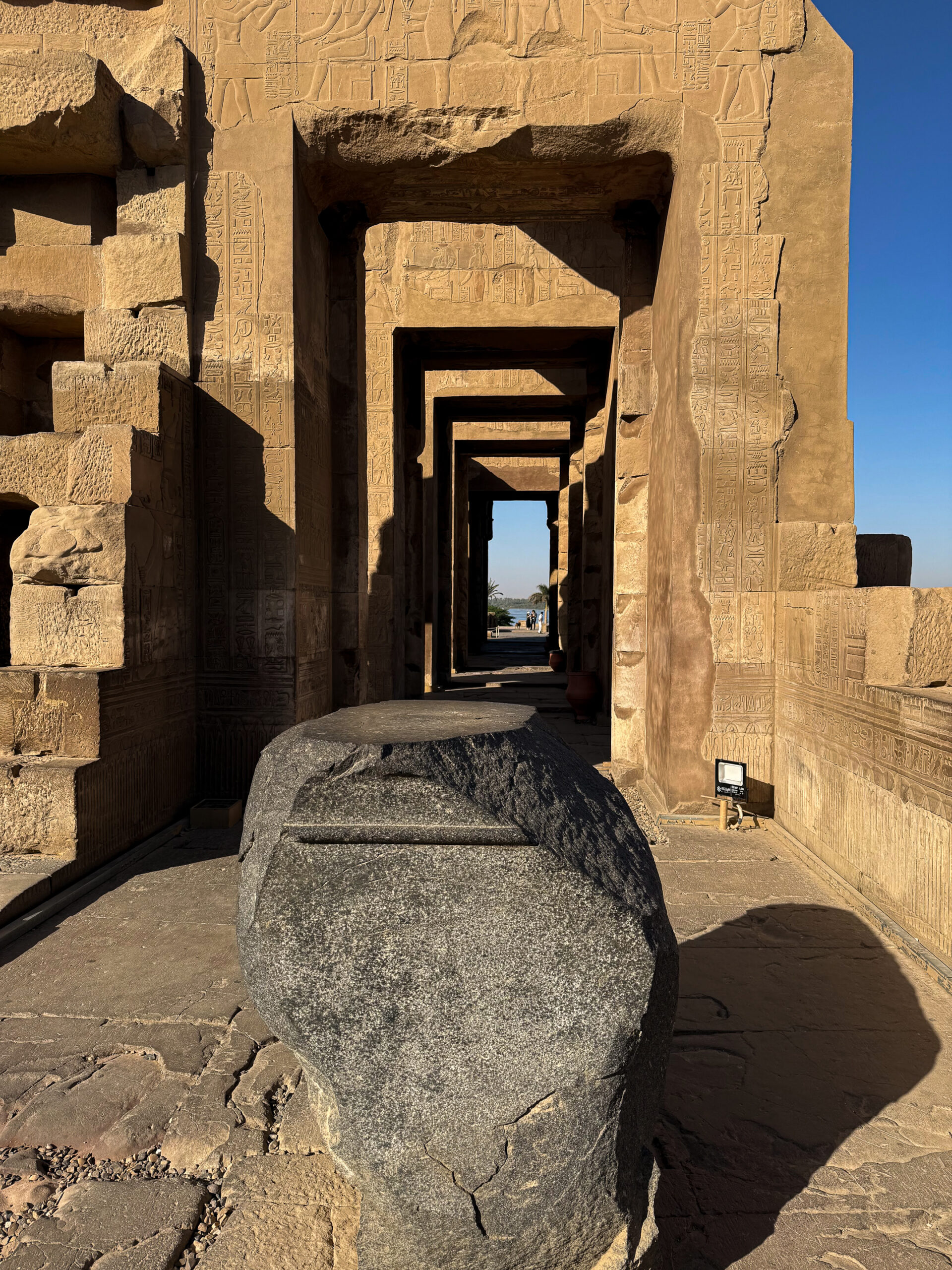
Kom Ombo is unique in Egypt for being dedicated to two gods, with a perfectly symmetrical design that reflects its dual purpose.
Top things to see:
- Twin sanctuaries for Sobek and Horus
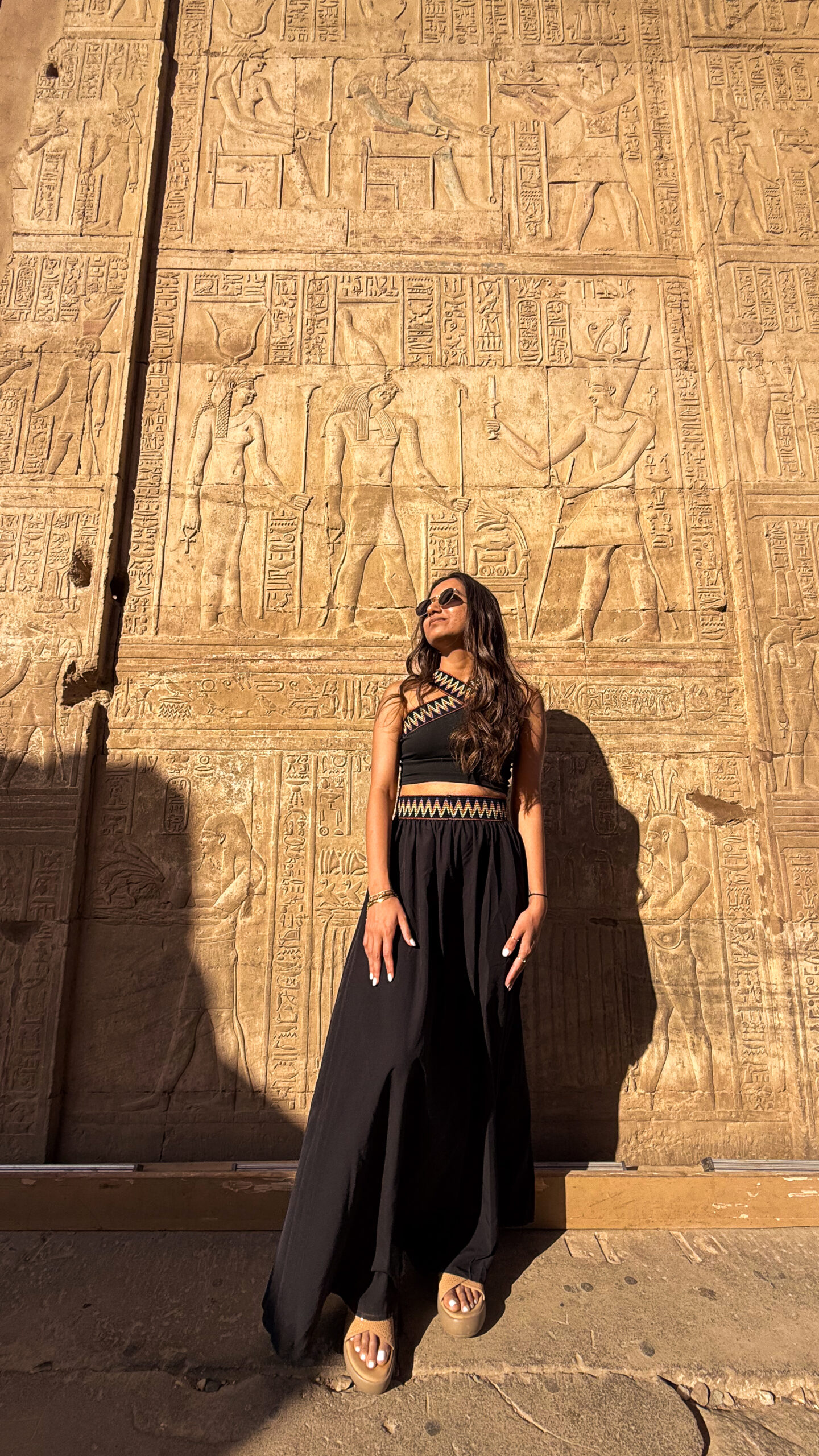
- Ancient medical reliefs depicting surgical instruments
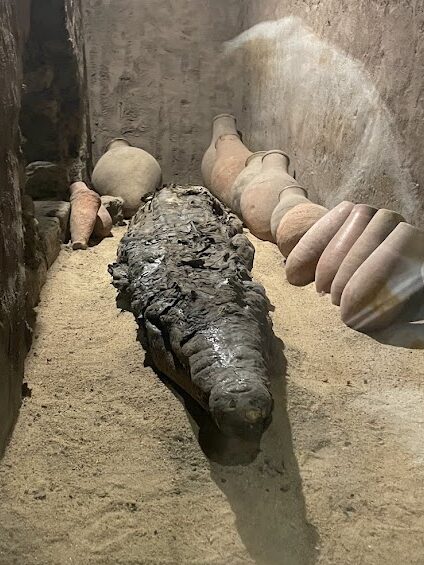
- Crocodile Museum nearby
Interesting facts you should know:
- Dedicated to Sobek (crocodile god) and Horus.
- Features ancient medical reliefs showing surgical tools.
- Crocodile mummies were discovered nearby.
- Time needed:
- 45 minutes–1 hour
- Best time to visit:
- Early morning or late afternoon
- Entry fee:
-
- 300 EGP (~$6 USD)
- 150 EGP for students
Travel tip:
Most travelers visit Kom Ombo as a stop on a Nile cruise between Luxor and Aswan. It’s also possible to visit independently by car.
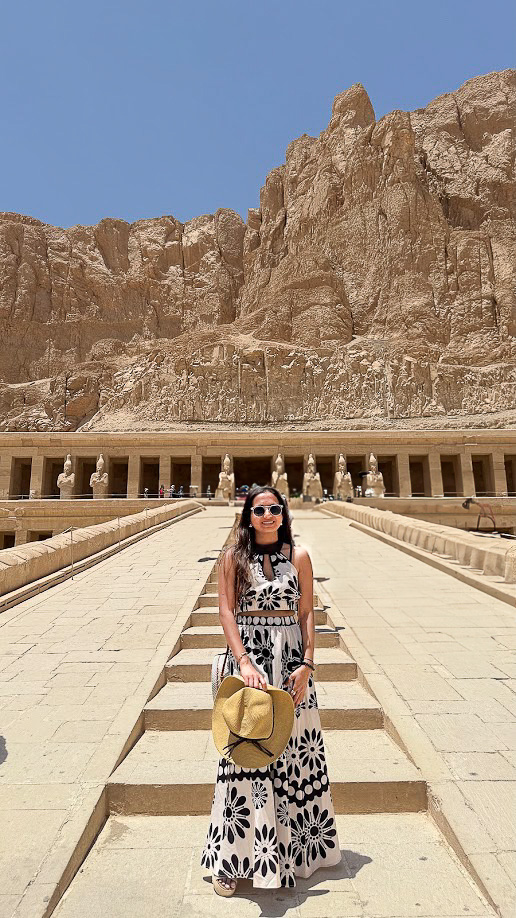
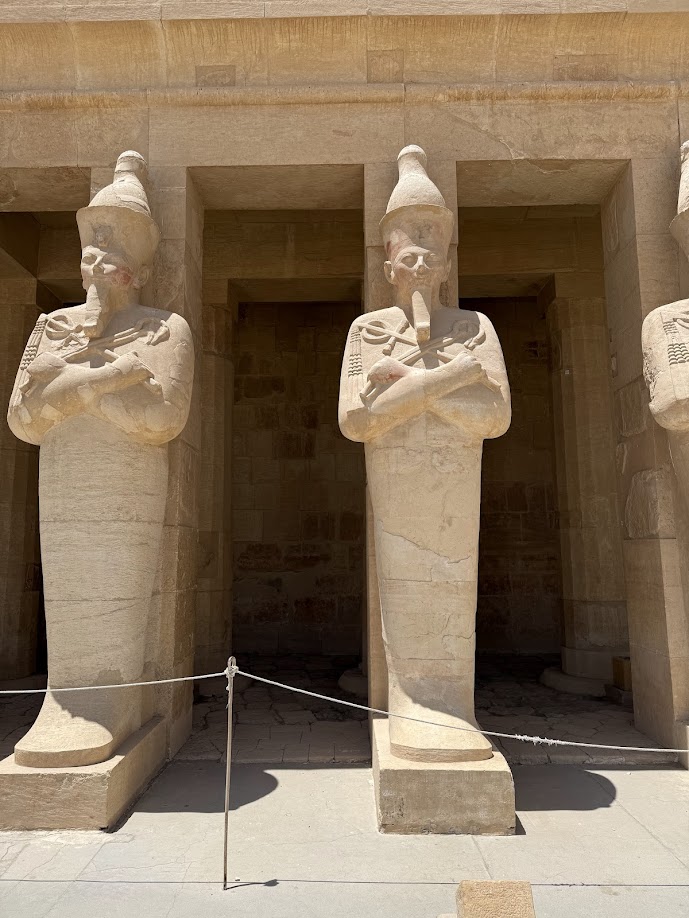
6. Temple of Hatshepsut (Luxor/West Bank) — A Pharaoh’s Architectural Masterpiece
This elegant, terraced temple stands out for its unique design and its association with one of Egypt’s most powerful female pharaohs.
Top things to see:
- Terraced colonnades carved into limestone cliffs
- Reliefs of the Punt Expedition
- Shrines dedicated to Amun and Hathor
Interesting facts you should know:
- Built for Queen Hatshepsut, one of Egypt’s few female rulers.
- Many images were later defaced by her successor.
- Reliefs show Egypt’s famous Punt Expedition.
- Time needed:
- 1-1.5 hours
- Best time to visit:
- Early morning
- Entry fee:
-
- 360 EGP (~$7.5 USD)
- 180 EGP for students
Travel tip:
The temple is part of Luxor’s West Bank and is often visited with the Valley of the Kings. An early visit helps avoid crowds and harsh sunlight.
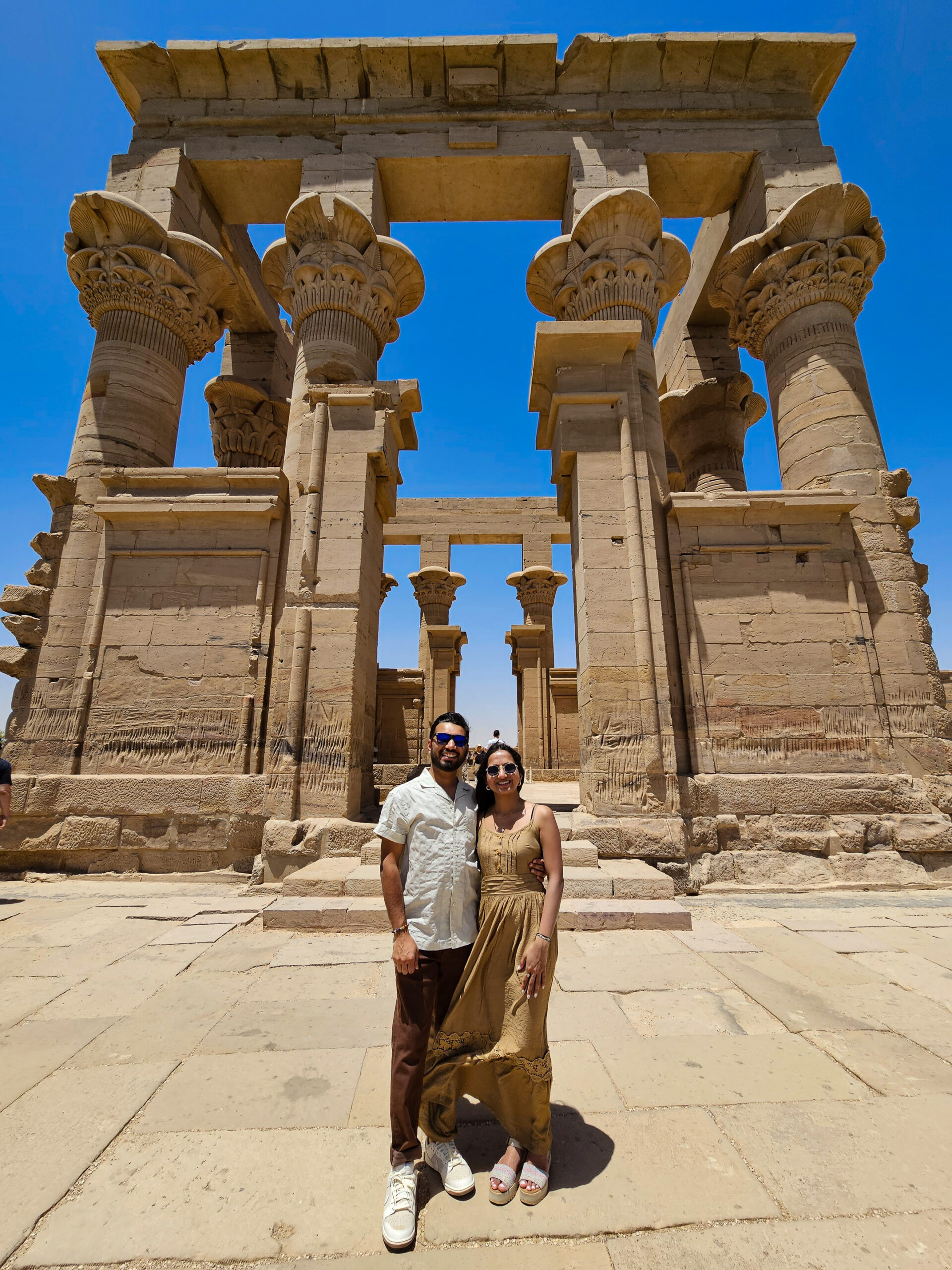
7. Philae Temple (Aswan) — The Temple of the Goddess Isis
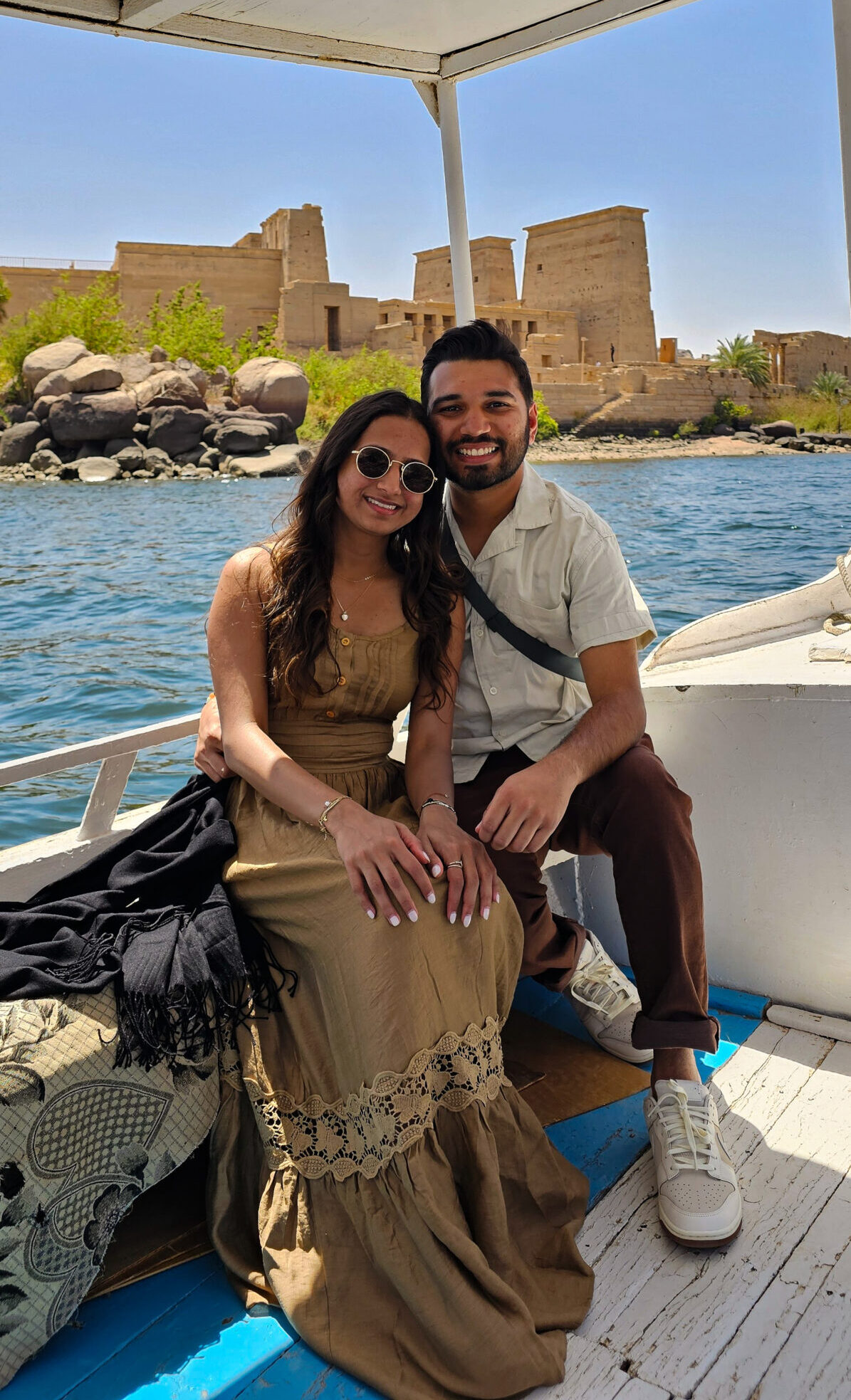
Philae Temple is one of Egypt’s most photogenic sites, beautifully set on an island and dedicated to the goddess Isis.
Top things to see:
- Main Temple of Isis
- Island setting with scenic views
- Evening sound and light show (optional)
Interesting facts you should know:
- Moved stone by stone to its current island location.
- One of the last active pagan temples in Egypt.
- Reached only by boat.
- Time needed:
- 1-1.5 hours
- Best time to visit:
- Morning or late afternoon
- Entry fee:
-
- 550 EGP (~$11 USD)
- 275 EGP for students
Travel tip:
Philae Temple is accessed by boat from Aswan. Boat transfers are organized at the dock, and guided visits help explain the island’s relocation and history.
Suggested 3–5 Day Egypt Temple Itinerary (How to Plan It)
Planning a full Egypt trip? Here’s how to organize your temple visits efficiently without rushing through them. This mini-itinerary shows you the best way to group temples geographically, based on our complete 10-Day Egypt Itinerary.
3-Day Temple Highlights (Quick Trip)
Day 1 – Luxor East Bank:
Start at Karnak Temple in the morning, then explore Luxor Temple in the cooler evening light when it’s beautifully illuminated.
Day 2 – Luxor West Bank:
Visit the Temple of Hatshepsut, then continue to Medinet Habu and nearby sites like the Colossi of Memnon.
Day 3 – Aswan or Abu Simbel:
Take an early trip to Philae Temple from Aswan, or make the long but unforgettable journey to Abu Simbel (4 AM departure recommended for sunrise).
5-Day Complete Temple Route (Comprehensive)
Days 1-2 – Luxor Temples:
Spend two full days exploring Karnak, Luxor Temple, Hatshepsut, and Medinet Habu without rushing.
Day 3 – Nile Cruise to Aswan:
Stop at Kom Ombo Temple en route south. Most Nile cruises include this as an afternoon visit.
Day 4 – Aswan Temples:
Enjoy Philae Temple and other local highlights. Stay overnight in Aswan to prepare for Abu Simbel.
Day 5 – Abu Simbel Day Trip:
Use your Aswan base for a full-day trip to Abu Simbel. Return by late afternoon.
Final Thoughts: Exploring Egypt’s Temples Beyond the Highlights
The temples in this guide represent the absolute highlights of ancient Egypt—the ones you shouldn’t miss. Karnak’s towering columns, Abu Simbel at sunrise, the island setting of Philae, and Hatshepsut’s clifftop temple each tell a different story about pharaonic Egypt. Seeing them over 3-5 days gives you time to actually absorb what you’re looking at instead of rushing through.
If you have extra days in your itinerary, three other temples are worth considering: Edfu (incredibly well-preserved with an intact roof), Dendera (the zodiac ceiling is stunning), and Abydos (quieter and deeply atmospheric). These get far fewer visitors but offer just as much history.
The key is pacing yourself. Temple burnout is real, especially in the heat. Mix major sites with rest time, and don’t try to do everything into one day. Most travelers find that 2-3 temples per day feels manageable without feeling like a checklist.
Use this guide to decide which temples matter most to you, then build your route around them. Whether you’re doing a Nile cruise or traveling independently, our Egypt itinerary for 10 days shows you exactly how to visit these temples efficiently while including Cairo, the pyramids, and other highlights.