Japan Travel Guide: Everything to Know Before You Go

Planning your first trip to Japan can feel overwhelming. Between understanding the train system, completing entry requirements, deciding how much cash to carry and figuring out what to do with your luggage, there are many details to consider before you arrive This Japan travel guide breaks down each of these topics step by step..
After spending more than 15 days traveling through Tokyo, Mount Fuji, Kyoto and Osaka, we learned that Japan is surprisingly easy to navigate once you understand a few basics.
In this Japan travel guide, we are sharing everything we wish we had known before our trip, for our complete route, accommodations and daily activities, read our 15-Day Japan Itinerary.
Do You Need a Visa to Visit Japan?
Japan’s visa requirements depend on your passport nationality, country of residence, purpose of travel and length of stay.
Many nationalities, including travelers using a regular United States passport, can visit Japan for a short tourist stay without obtaining a visa in advance. Japan currently has short-term visa-exemption arrangements with numerous countries and regions.
Before booking your trip, check your eligibility through the official Ministry of Foreign Affairs of Japan website.
You can also view the current list of visa-exempt countries and regions.
Travelers who are not eligible for visa-free entry must obtain the appropriate visa before traveling.
Japan eVisa
The Japan eVisa system allows eligible travelers residing in certain countries or regions to apply online for a single-entry, short-term tourism visa. Eligibility depends on both your nationality and your country of residence.
Living in the United States does not automatically mean that you need or qualify for an eVisa. First confirm whether your passport nationality is already visa-exempt.
Before applying:
- Check whether your nationality is visa-exempt.
- Confirm that you meet the eVisa eligibility requirements.
- Review the documents required for your nationality and country of residence.
Apply only through the official Japan eVisa information page.
Visa requirements can change, so always verify the latest information through the Ministry of Foreign Affairs or your nearest Japanese embassy or consulate.
💡 Important: A Japan visa and Visit Japan Web are not the same. A visa is required for travelers who are not eligible for visa-free entry. Visit Japan Web is used to submit immigration and customs information before arriving in Japan.
Complete Visit Japan Web Before Your Flight
Visit Japan Web is an official Japanese government service that allows international travelers to submit immigration and customs information online before arriving in Japan. [ADD LINK: Visit Japan Web]
Completing it before your trip can make the arrival process more organized and save time at the airport because your information is connected to QR codes that can be presented during immigration and customs procedures.
You will generally need:
- Passport information
- Flight details
- Arrival date
- Departure information
- Address of your first accommodation in Japan
- Customs declaration details
We recommend completing Visit Japan Web several days before departure and saving screenshots of your QR codes. Airport Wi-Fi may be available, but having offline screenshots makes the process easier.
Each traveler should have their required information available. Families traveling together may be able to register accompanying family members within the same account, depending on the system’s current rules.
💡 Travel Tip: Visit Japan Web can save you time at the airport, but it is not a fast-track immigration service or a replacement for immigration screening. It simply allows you to complete certain arrival procedures online before reaching Japan.
What Documents Should You Carry?
Keep the following documents accessible while traveling to Japan:
- Your passport
- Visa or eVisa information, when required
- Visit Japan Web QR codes
- Return or onward flight confirmation
- First hotel address
- Travel insurance information
- Accommodation confirmations
- Copies of important prescriptions
Foreign visitors should carry their passports while traveling in Japan. Your original passport may also be required when making qualifying tax-free purchases.
Save digital copies of important documents in a secure location, but do not rely solely on digital copies where the original passport is required.
Getting To and From Tokyo’s Airports
Tokyo is served primarily by Narita International Airport and Haneda Airport.
Narita is located farther from central Tokyo, while Haneda is generally closer to neighborhoods such as Shinjuku, Shibuya, Ginza and Asakusa.
The best airport transportation depends on:
- The airport where you land
- Your hotel location
- How much luggage you have
- Your arrival time
- Whether you prefer the fewest transfers or the lowest price
Getting From Narita Airport to Tokyo
Narita Airport is located outside central Tokyo, so allow approximately one to two hours to reach the city after completing immigration and collecting your luggage.
Narita Express
The Narita Express, also called N’EX, connects Narita Airport with major stations including Tokyo, Shibuya, Shinjuku and Yokohama.It is a convenient option when your hotel is near one of its direct stations because it offers reserved seating and luggage-storage areas.
A one-way ticket to central Tokyo usually costs around ¥3,000–¥3,500, depending on your destination.
Keisei Skyliner
The Keisei Skyliner is one of the fastest train options from Narita Airport and is especially convenient for travelers staying near Ueno, Nippori or Asakusa.
Tickets generally cost around ¥2,500–¥3,000 per person.
If you are staying in Shinjuku or Shibuya, you will usually need to transfer to another train.
Airport Limousine Bus
Airport limousine buses connect Narita Airport with major stations and selected hotels throughout Tokyo. They may take longer when traffic is heavy, but they can be one of the easiest options when the bus stops directly at or near your accommodation.
Fares are generally around ¥3,000–¥4,000 per person, depending on the destination.
This option is especially useful for travelers carrying several suitcases or staying at a hotel served directly by the bus.
Taxi or Private Transfer
A taxi or private transfer is the most convenient door-to-door option, but it is also the most expensive.
A taxi from Narita Airport to central Tokyo can cost around ¥30,000 or more, depending on the destination, tolls and time of travel.
It may make sense for larger groups, late-night arrivals or travelers who want to avoid navigating trains with heavy luggage.
💡 Our Experience: We took the Narita Express directly to Shinjuku because it offered the best balance of comfort and convenience with luggage. We purchased our tickets after completing immigration at Narita Airport, and the process was easy. There is usually no need to book in advance. You can buy tickets from the JR ticket counter or machines after you arrive. We landed around noon and reached our accommodation in Shinjuku around 3–4 PM.
Getting From Haneda Airport to Tokyo
Haneda Airport is much closer to central Tokyo than Narita, so the journey is usually faster and more affordable.
Tokyo Monorail
The Tokyo Monorail connects Haneda Airport with Hamamatsucho Station, where you can transfer to JR lines for Tokyo Station, Shibuya, Shinjuku and other areas.
Tickets generally cost around ¥500–¥600 per person.
Keikyu Airport Line
The Keikyu Line connects Haneda with Shinagawa and continues toward areas such as Asakusa on certain services.
It is often one of the fastest and most affordable options, with fares to central Tokyo generally around ¥300–¥700 per person, depending on your destination.
Airport Limousine Bus
Limousine buses serve major stations and selected hotels throughout Tokyo.
This is a convenient option when the bus stops near your accommodation, especially if you have large luggage. Fares are generally around ¥1,000–¥1,500 per person. The fare to the Shinjuku area is approximately ¥1,400.
Taxi
A taxi is more practical from Haneda than from Narita because the airport is much closer to central Tokyo.
Depending on your destination, traffic and tolls, expect to pay approximately ¥7,000–¥12,000 or more. It can be a good option for groups, late arrivals or travelers with several suitcases.
💡 Our Recommendation: Choose the Monorail or Keikyu Line for the quickest and most affordable journey. Use the limousine bus if it stops near your hotel, or take a taxi when convenience matters more than cost.
Which Airport Transportation Should You Choose?
Choose the route that requires the fewest complicated transfers rather than automatically selecting the fastest train.
Carrying luggage through Tokyo Station or Shinjuku Station during a busy period can be stressful. A slightly longer bus that stops beside your hotel may be easier than changing trains several times.
Use Google Maps to compare routes, but also verify:
- The correct train company
- Whether reserved seats are required
- The exact station exit
- The final train or bus time
- Whether your route includes stairs
How to Use Trains in Japan
Japan’s train system is clean, extensive and very reliable, but major stations can be enormous.
Stations such as Shinjuku, Tokyo, Shibuya and Osaka contain multiple railway companies, underground passages, shopping centers, restaurants and dozens of exits.
Google Maps was the app we used most during our trip. It usually showed:
- Train departure time
- Platform number
- Train direction
- Number of stops
- Transfer station
- Recommended station exit
- Estimated fare
- Best train car to board for the quickest transfer or closest exit
Follow the route carefully and make sure you are entering the correct railway company’s section of the station.
💡 Travel Tip: Arrive earlier than you think you need to. Some Japanese stations are essentially complete shopping malls, and reaching the correct platform can take time.

Get a Suica, PASMO or ICOCA Card
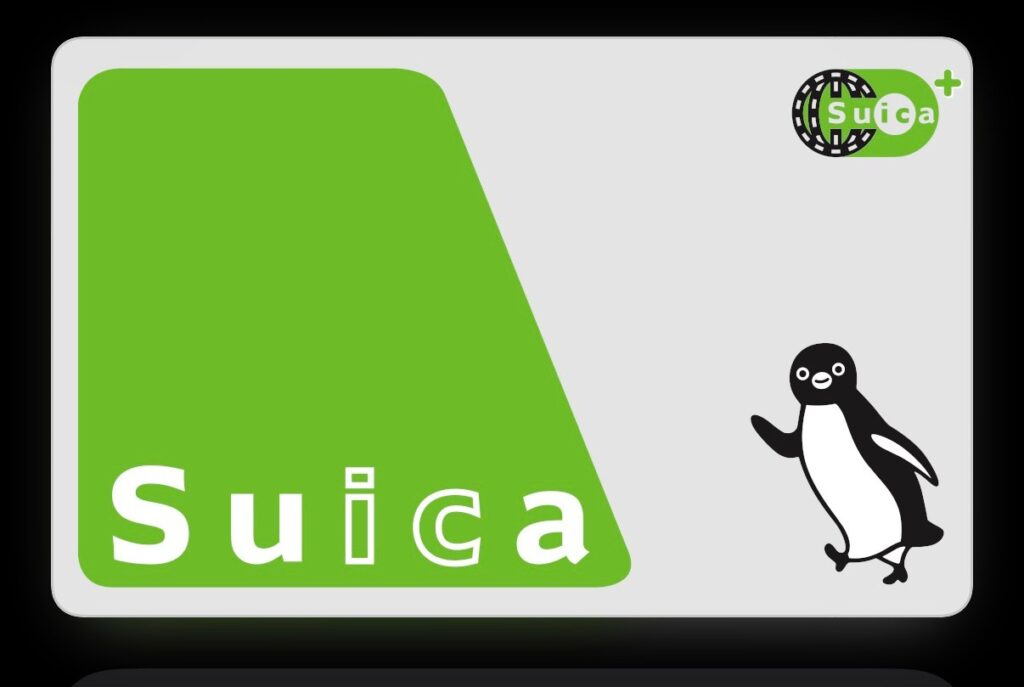
IC cards are rechargeable travel cards that can be used on most local trains, subways and buses across Japan.
The main cards are:
- Suica
- PASMO
- ICOCA
We used the digital Suica card on our iPhones, and it was one of the most convenient tools during our trip. We used it at train stations, convenience stores, vending machines, cafés and coin lockers.
It was also very easy to recharge directly through Apple Wallet whenever the balance was low, so we did not need to visit a ticket machine each time.
💡 Important: IC cards are mainly used for local transportation and everyday purchases. Shinkansen and certain reserved trains may still require separate tickets.
Should You Buy a Japan Rail Pass?
Do not automatically purchase the nationwide Japan Rail Pass.
Calculate the price of your planned long-distance journeys first. Depending on your route, individual Shinkansen tickets or a regional rail pass may cost less.
The nationwide pass can still be useful for certain fast-paced itineraries, but it is not always the most economical option for a standard Tokyo, Kyoto and Osaka trip.
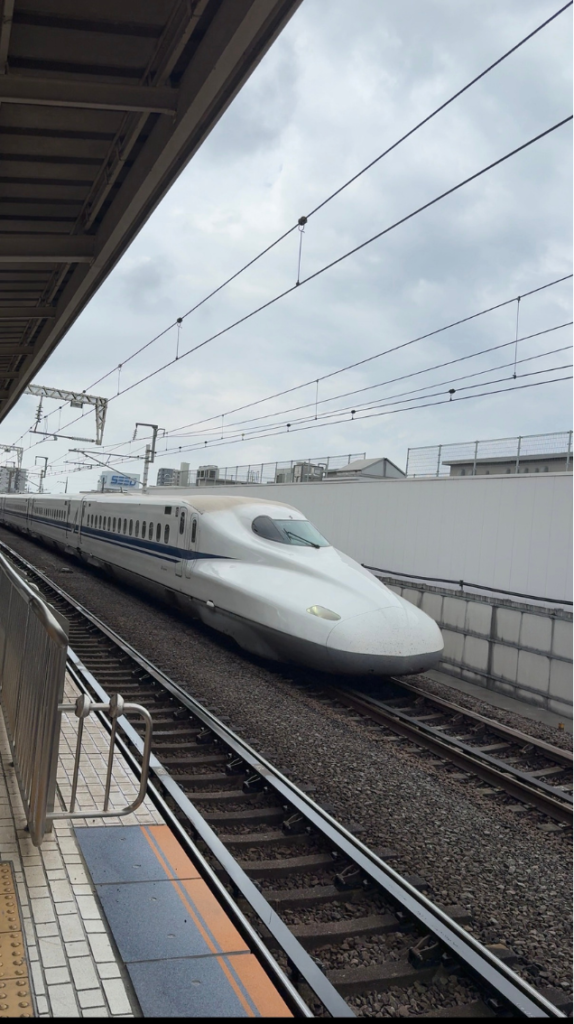
Reserve Popular Transportation in Advance
Consider booking the following in advance:
- Tokyo-to-Kawaguchiko highway buses
- Shinkansen seats during holiday periods
- Limited express trains
- Airport trains requiring reservations
- Oversized baggage seats on applicable Shinkansen routes
We reserved our morning bus from Tokyo Station to Kawaguchiko because popular departures can sell out, especially during weekends and cherry blossom season.
Handling Luggage in Japan
One of the best decisions we made during our trip was using Japan’s luggage-forwarding services.
Instead of carrying large suitcases through stations, onto trains and across crowded streets, we shipped our luggage ahead through our hotels.
This made traveling between Tokyo, Mount Fuji, Kyoto and Osaka considerably easier.
What Is TA-Q-BIN?
TA-Q-BIN is a door-to-door parcel delivery service commonly associated with Yamato Transport.
Travelers can use it to send luggage between participating:
- Hotels
- Airports
- Yamato service counters
- Yamato sales offices
- Convenience stores
- Residential addresses
Availability varies by location, and not every hotel or convenience store offers every service.
Yamato’s standard TA-Q-BIN service currently accepts parcels with combined length, width and height of up to 200 centimeters and a maximum weight of 30 kilograms. Some items remain restricted even when they fall within those limits.
Our Experience Using Luggage Forwarding
We used luggage shipping throughout our Japan trip, arranging it through our hotels whenever possible.
The hotel staff helped complete the shipping form and confirmed the destination hotel information. We then traveled with only a small overnight bag until our suitcases arrived.
It was especially helpful when:
- Traveling on the Shinkansen
- Navigating busy stations
- Moving between cities
- Staying in Mount Fuji for a short visit
- Using buses with limited luggage space
- Checking out before continuing sightseeing
For our Mount Fuji portion, we did not need every large suitcase. We packed the essentials for the glamping stay into a smaller bag and sent the main luggage ahead to our next major destination.
This meant we could travel to Kawaguchiko without pulling large suitcases through Tokyo Station or trying to fit everything onto the highway bus.
How to Send Luggage Between Hotels
Ask your current hotel whether it offers luggage-forwarding services.
You will normally need:
- The name of your next hotel
- Hotel address
- Hotel telephone number
- Name on the reservation
- Check-in date
- Number of bags
- Preferred delivery date
Contact the receiving hotel in advance to confirm that it accepts forwarded luggage and can store it before your arrival.
The name on the delivery form should match the name on your hotel reservation as closely as possible.
How Long Does Luggage Delivery Take?
Delivery is not always same-day.
Depending on the destination, distance, weather and collection time, luggage may take one or more days to arrive. Remote areas, airports and islands may require additional time.
Never ship anything you absolutely need immediately after arriving.
Luggage Forwarding to the Airport
Luggage can also be sent to participating airport counters, but airport delivery generally requires more lead time.
Confirm:
- Which airport terminal you are departing from
- The carrier counter location
- Required delivery deadline
- Collection hours
- Name on the airline reservation
- Flight date and departure time
Do not send airport luggage at the last minute. Ask the hotel or delivery counter exactly when the suitcase must be shipped to arrive safely before your flight.
Coin Lockers in Japan
Coin lockers are useful when you need to store bags for a few hours rather than ship them to another city.
They can often be found in:
- Train stations
- Shopping centers
- Tourist areas
- Bus terminals
Many lockers accept IC cards, while others accept coins.
Large lockers can fill quickly in popular stations. Apps such as Bounce may also help locate staffed luggage-storage facilities.
Take a photo of the locker area, locker number and nearby station exit so you can find it again.
💡 Our Recommendation: Use lockers for temporary same-day storage and luggage forwarding for travel between cities.
Money and Payments in Japan
Japan increasingly accepts credit cards, but cash is still useful.
Small restaurants, traditional shops, temples, ticket machines and rural businesses may be cash-only.
We recommend carrying a combination of:
- Japanese yen
- A credit card with no foreign transaction fee
- A backup credit card
- A physical IC card or digital transportation card
A reasonable starting point is approximately ¥2,000 per person per day in cash, adjusted for your dining and shopping plans. You may use much less on some days and considerably more on others.
Convenience-store ATMs are widely used by international travelers, but card compatibility and fees depend on your bank.
Apple Pay and Contactless Payments
Do not assume that every business accepting credit cards will accept Apple Pay or your specific contactless wallet.
Keep a physical card and some cash available.
Save Your Coins
Japan uses several coin denominations, and they accumulate quickly.
Use coins at:
- Vending machines
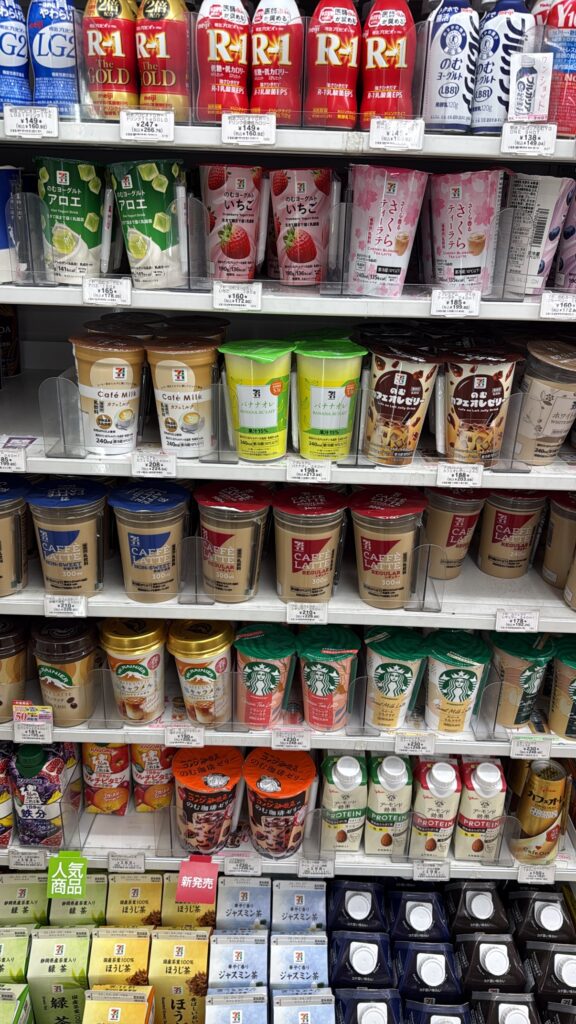
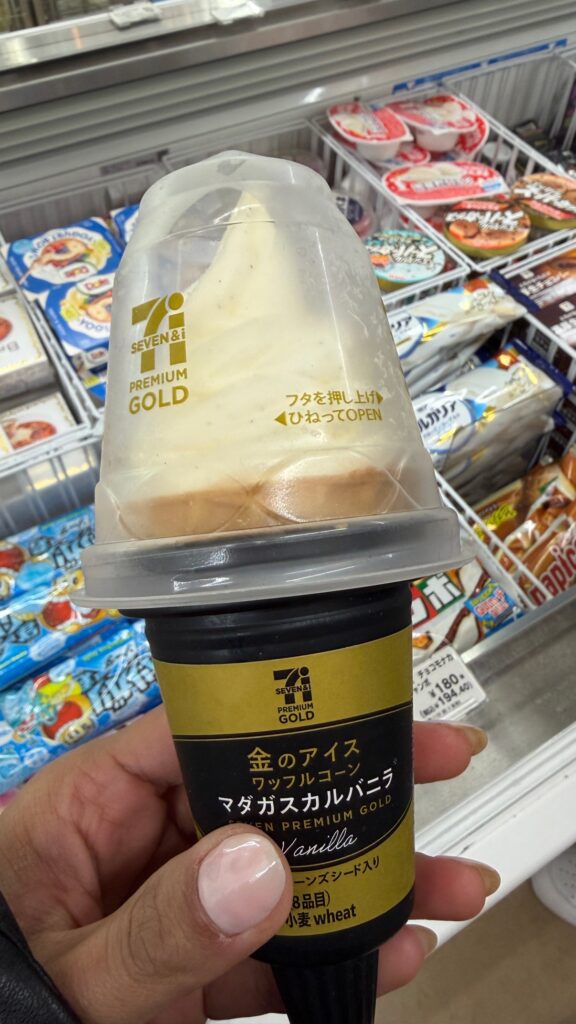
- Convenience stores
- Self-checkout machines
- Coin lockers
- Ticket machines
Self-checkout machines are particularly helpful for using up smaller coins near the end of your trip.
Tax-Free Shopping in Japan
Eligible international visitors can receive tax-free treatment at participating stores when meeting the current purchase and eligibility requirements.
Carry your original passport because stores may need to scan or verify it. A photograph or photocopy may not be accepted.
Look for the tax-free shopping sign and ask the store whether your purchase qualifies.
Tax-free rules and procedures can change, so follow the instructions provided by the store and Japanese customs.
Internet and Mobile Data
Reliable mobile data makes traveling in Japan much easier.
We used online navigation constantly for:
- Train directions
- Translation
- Restaurant searches
- Hotel addresses
- Attraction tickets
- Transportation schedules
Options include:
- eSIM
- Physical SIM card
- Pocket Wi-Fi
- International roaming plan
We used Ubigi for mobile data during our trip.
Download Japanese in Google Translate for offline use before departure. Also save your hotel addresses and major transportation details in case you temporarily lose internet access.
Japanese Etiquette: The Do’s and Don’ts
Visitors are not expected to know every custom. Being quiet, respectful and observant goes a long way.
Do Keep Your Voice Low
Japanese trains are usually quiet. Keep conversations soft, silence your phone and avoid taking calls.
Do Follow the Lines
Train platforms and entrances often have marked waiting lines. Stand in line and let passengers exit before boarding.
Do Remove Your Shoes When Asked
Shoes may need to be removed in traditional accommodations, tatami rooms, certain restaurants and private homes. Wear clean socks and shoes that are easy to take off.
Don’t Eat While Walking
Many street-food shops ask customers to eat beside the shop rather than while walking. Follow posted signs and return packaging when requested.
Carry a Small Towel and Trash Bag
Public restrooms may not have paper towels, and public trash cans can be difficult to find.
Don’t Block Walkways
Move to the side when checking Google Maps, especially inside busy stations.
Ask Before Taking Photos
Do not photograph people closely without permission. In Kyoto, never touch, chase or block geisha or maiko for a photo.
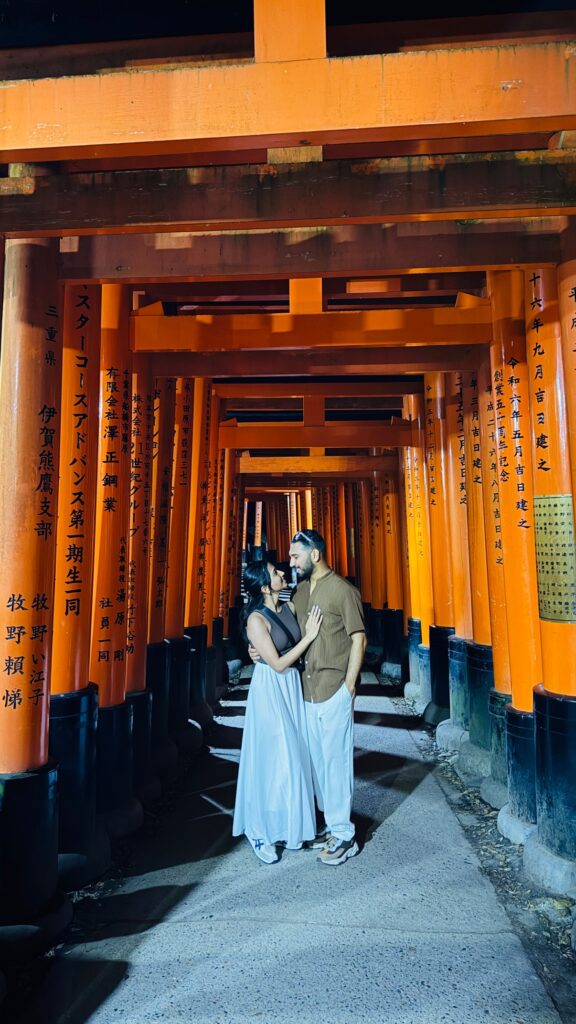
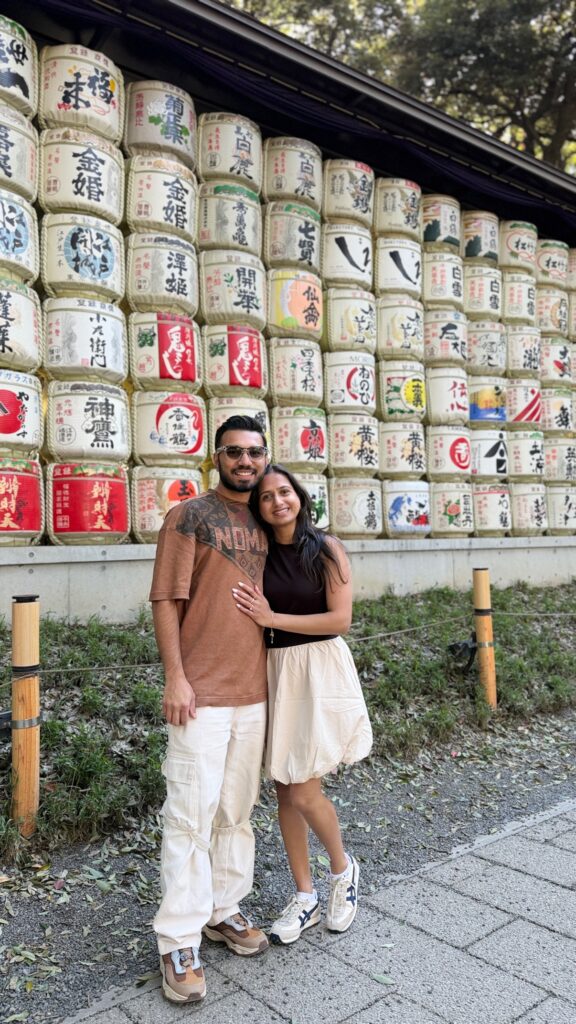
Respect Temples and Shrines
Keep your voice low, avoid interrupting worshippers and follow all photography rules.
Use Chopsticks Respectfully
Do not stick chopsticks upright in rice, point with them or pass food directly from one pair of chopsticks to another.
Tipping Is Not Expected
Tipping is generally not required at restaurants, hotels or in taxis.
Follow Onsen Rules
Wash before entering, keep towels out of the water, do not take photos and check the property’s tattoo policy in advance.
Restaurant Tips for Japan
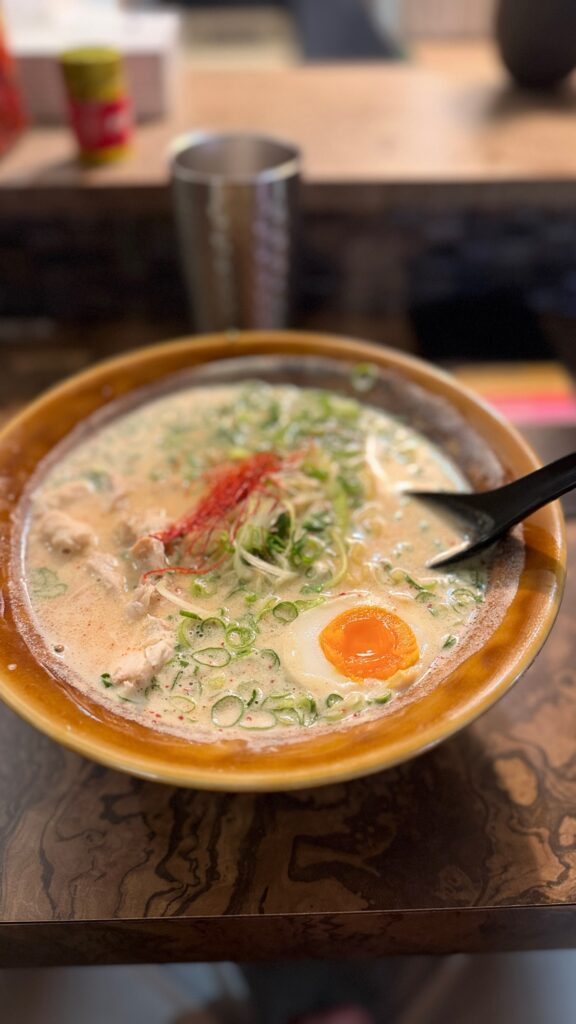
Japan is an incredible food destination, but travelers with dietary restrictions should prepare in advance.
Terms such as “vegetarian” can be interpreted differently. A dish without visible meat may still contain:
- Fish-based dashi
- Bonito flakes
- Fish sauce
- Meat broth
- Gelatin
- Egg
- Dairy
Save a Japanese dietary-restriction card on your phone and confirm ingredients rather than relying only on the name of the dish.
Apps and websites such as HappyCow can help find vegetarian and vegan restaurants.
At many casual restaurants:
- Order from a ticket machine.
- Hand the ticket to the staff.
- Sit in the assigned seat.
- Return dishes or trays when instructed.
Allergies and Pollen During Spring
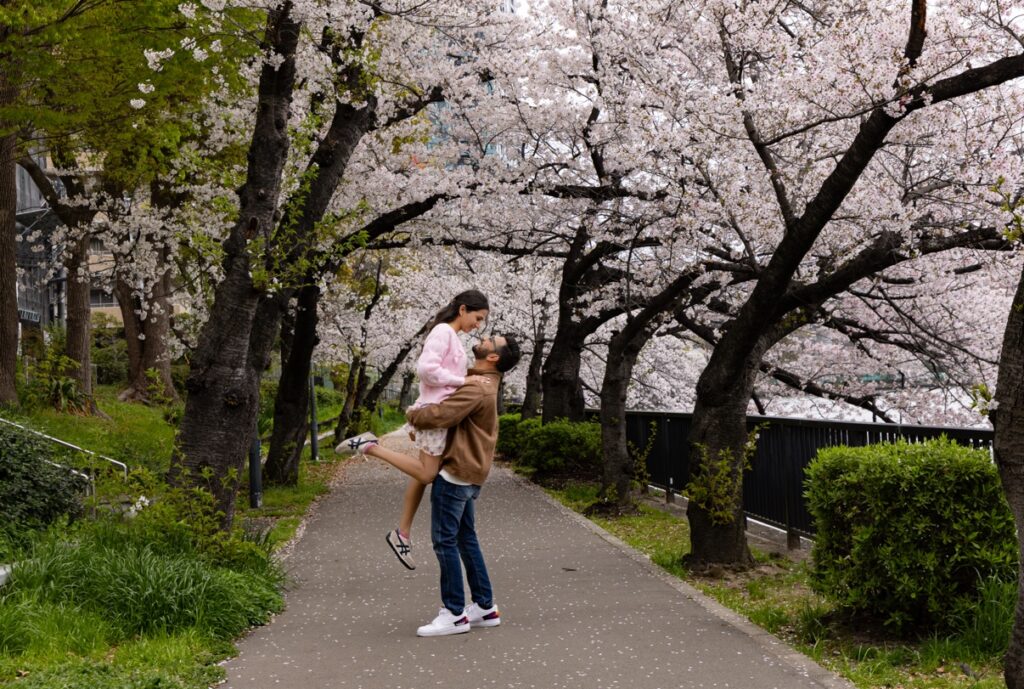
Pollen can be very high in Japan during March and April.
Travelers sensitive to pollen may want to pack familiar allergy medication or consult a healthcare professional before the trip.
Common products found in Japanese pharmacies may include:
- Anti-allergy eye drops
- Nasal sprays or rinses
- Pollen-barrier sprays
- Masks
- Non-drowsy allergy medication
What to Pack for Japan
Comfortable Walking Shoes
We walked significantly more in Japan than we normally do at home.
Bring supportive shoes that have already been broken in. Because shoes are removed in certain restaurants, temples and accommodations, choose a pair that is easy to take off and put back on.
Small Hand Towel
Carry a reusable hand towel because not every restroom provides a drying option.
Portable Charger
Navigation, translation, photography and digital tickets can drain your battery quickly.
Chargespot locations allow users to rent portable batteries in many parts of Japan, but carrying your own charger is still helpful.
Reusable Water Bottle
Japan has many vending machines, but carrying a reusable water bottle can reduce unnecessary plastic.
The mymizu app can help identify refill locations.
Small Trash Bag
Carry a small resealable bag for wrappers and other waste until you find an appropriate trash can.
Medication
Bring enough prescription medication for your complete trip and check Japan’s medication-import rules before traveling.
Some medications that are legal in other countries may be controlled or restricted in Japan.
Layers and Rain Protection
Japan’s weather can change quickly during spring.
Pack:
- Light layers
- Compact umbrella
- Light rain jacket
- Comfortable socks
- Warmer outer layer for Mount Fuji
- Sun protection
Mount Fuji and Kawaguchiko can feel considerably colder than Tokyo or Osaka.
Best Apps for Traveling in Japan
Google Maps
We used Google Maps for trains, walking directions, platform information and station exits.
Google Translate
Download Japanese for offline access. The camera-translation feature is useful for menus, signs and product labels.
Suica or Another IC Card
Use an eligible digital IC card for public transportation and participating stores.
Klook
Useful for reserving attractions, transportation and selected experiences.
Ubigi
An eSIM option for mobile data.
Tabelog
A Japanese restaurant-review platform that can help identify local dining options.
Japanese reviewers often rate conservatively, so a score that appears modest may still represent a very good restaurant.
mymizu
Find locations where you can refill a reusable water bottle.
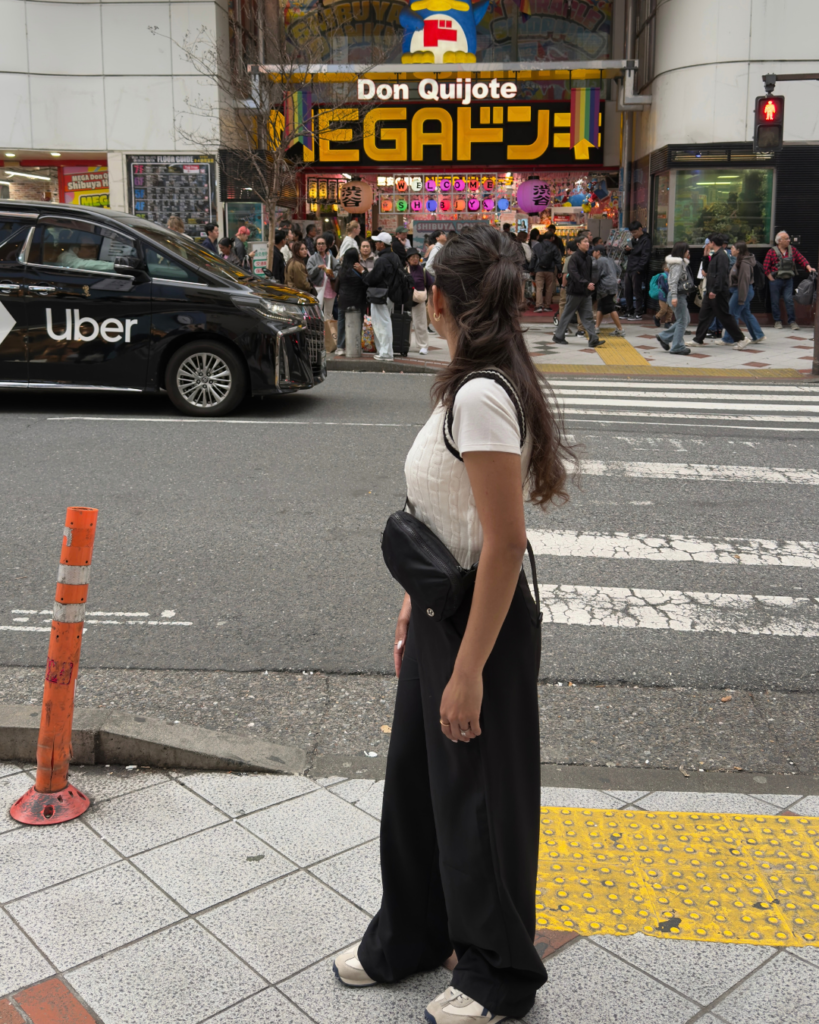
Uber
Useful for requesting taxis in supported areas.
GO
A commonly used taxi-booking app in Japan.
ChargeSPOT
Find stations where portable phone batteries can be rented.
Safety Tips
An official Japan Tourism Agency app providing disaster information and travel alerts for international visitors.
Flush
Helps locate public restrooms.
Bounce
Find participating luggage-storage businesses.
Useful Japanese Phrases
You do not need to speak Japanese to visit Japan, but learning a few basic phrases is appreciated.
- Yes: Hai, はい
- Excuse me / I’m sorry: Sumimasen, すみません
- Thank you very much: Arigato gozaimasu, ありがとうございます
- Good morning: Ohayo gozaimasu, おはようございます
- Hello / Good afternoon: Konnichiwa, こんにちは
- Please: Onegaishimasu, お願いします
- Can I have the bill, please?: Okaikei onegaishimasu, お会計お願いします
- Where is the restroom?: Toire wa doko desu ka?, トイレはどこですか?
- Thank you for the meal: Gochisosama deshita, ごちそうさまでした
- Do you have an English menu?: Eigo no menyū wa arimasu ka?, 英語のメニューはありますか?
- I am vegetarian: Watashi wa bejitarian desu, 私はベジタリアンです
💡 Tip: “Sumimasen” is especially useful because it can mean excuse me, sorry, or help get someone’s attention.
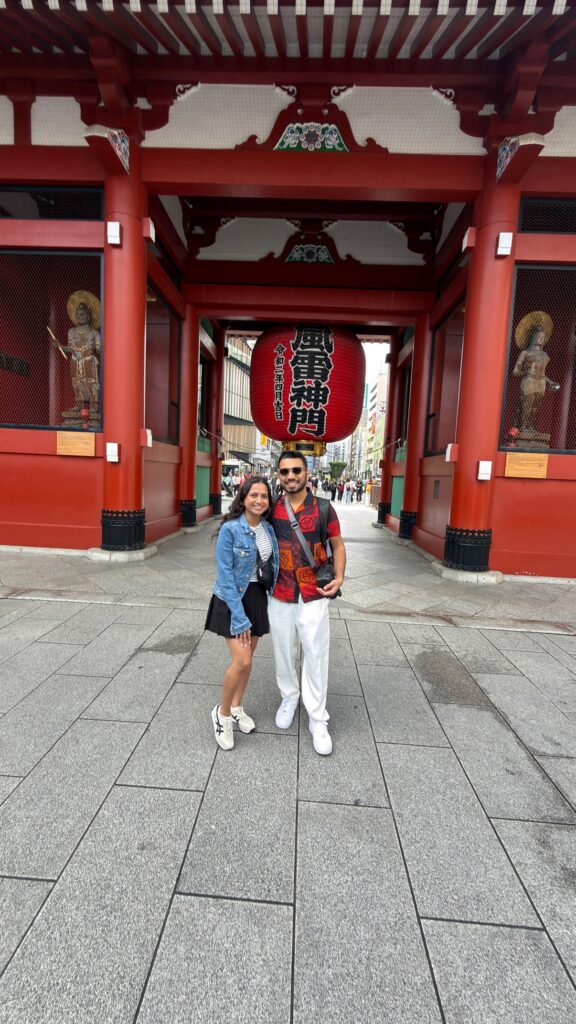
Japan Travel Tips We Learned
- Download Japanese in Google Translate for offline use.
- Complete Visit Japan Web before departure.
- Check visa requirements using your passport nationality.
- Reserve popular attractions in advance.
- Book Shibuya Sky sunset tickets early.
- Reserve teamLab tickets before your trip.
- Get a Suica, PASMO or ICOCA card.
- Carry cash and a physical credit card.
- Keep your passport with you.
- Use luggage forwarding between major destinations.
- Pack a small overnight bag when forwarding suitcases.
- Arrive at large stations early.
- Pay close attention to station exit numbers.
- Follow marked lines on train platforms.
- Wear shoes that are easy to remove.
- Carry a hand towel and small trash bag.
- Avoid eating while walking unless the area permits it.
- Speak quietly on public transportation.
- Check for fish-based broth when ordering vegetarian food.
- Prepare for heavy pollen during March and April.
- Bring a portable charger.
- Leave extra space in your suitcase for shopping.
Japan has a reputation for being complicated to plan, but once we understood transportation, luggage forwarding and a few cultural rules, it became one of the easiest and most enjoyable countries we have traveled through.
For our exact route, hotels, restaurants and daily plans, continue to our 15-Day Japan Itinerary: Tokyo, Mount Fuji, Kyoto and Osaka. This Japan travel guide walks you through it all, step by step.